The way the dominant paradigm currently relates to the Wharemauku River is built upon shared values that have resulted in actions of disconnection, apathy and abuse.
By consciously amplifying stories of interconnectedness, as understood by haukainga, we hope to contribute to a far more beautiful future.
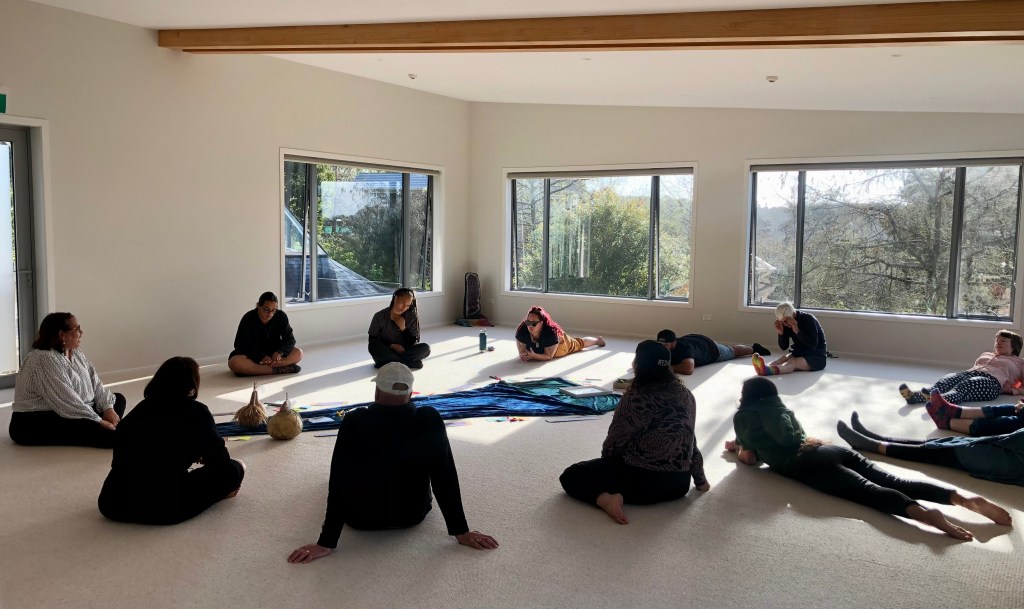
AWE leverages the power of stories to inspire teachers and learners in the Kapiti rohe, to ultimately bring about systemic shifts.

Remembering we are nature
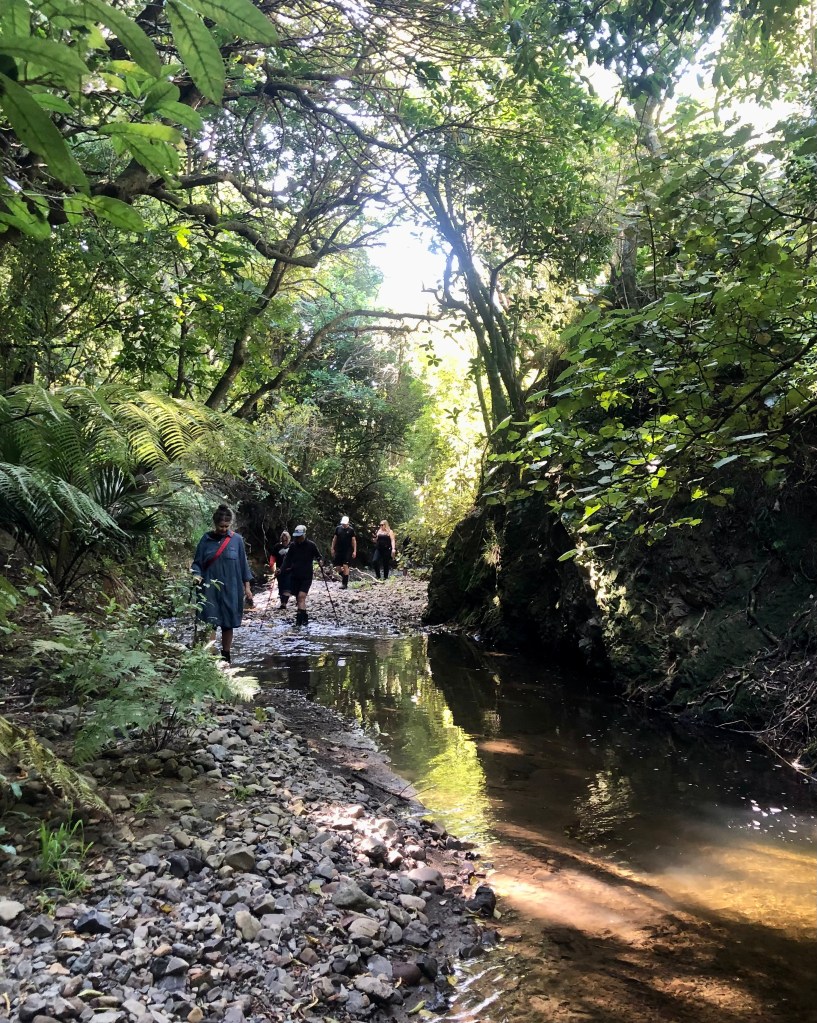
This emphasis on being outside and in relation to the taiao helps to develop connections to the Wharemauku River and to see ourselves as part of them too. Time in nature positively impacts our hauora at a personal and collective level.
Strong nature connections are required to act in ways that benefit the Earth. AWE is purposefully planned as experiential seasonal workshops for teachers in the Kāpiti region grounded in place.
For more information about the importance of nature connection, please read this research spotlight from the NZ Association for Environmental Education
About the team
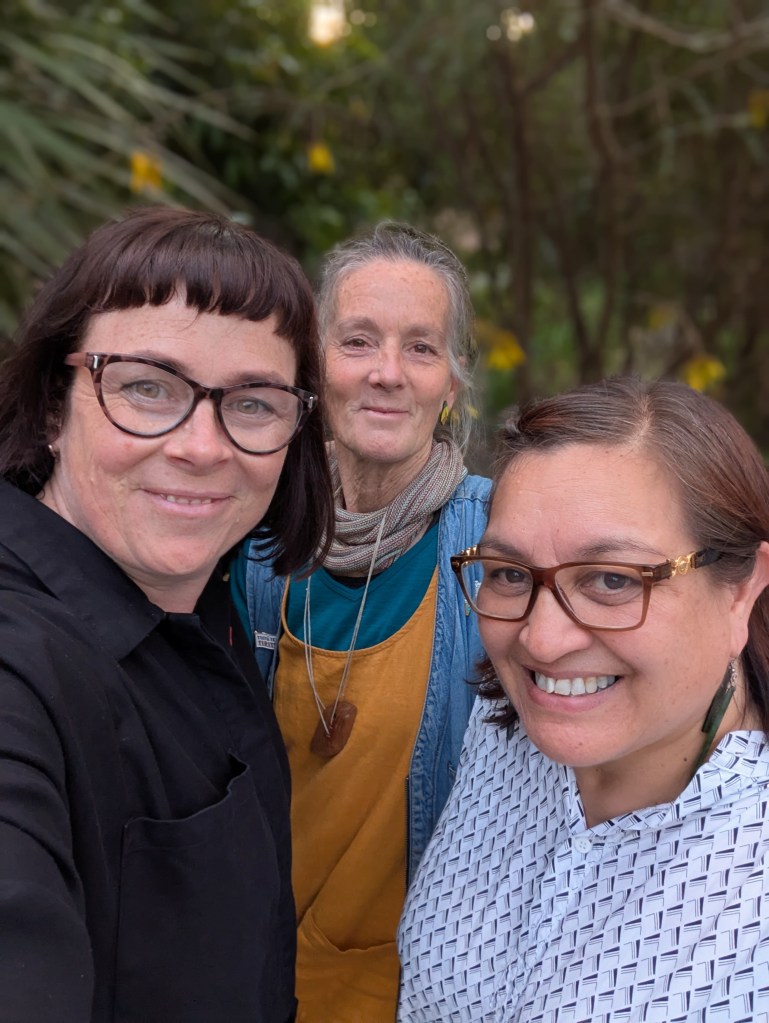
Sharlene Maoate-Davis
(Ngāti Wehiwehi, Ngāti Huia, Ngāti Toa Rangatira, Ngai Tahu, Taranaki, Te Ātiawa)
Sharlene has worked across sectors in Iwi and Māori health, education and social services providing professional development services as a cultural supervisor and training whānau, hapū, iwi and community practitioners.
Born in her tribal home of Kāpiti, Sharlene is an experienced Pou Rongoā – Rongoā practitioner. She is one of three founding members, of the Rongoā Collective of the A.R.T. Confederation who have over 30 qualified Kairongoā delivering Rongoā/ Taiao based, Iwi partnership projects throughout the greater Wellington region.
As co-chair of Mauri Tūhono, and co-director of MokoPuna Solutions, Sharlene is committed to embedding mātauranga and tikanga-a-iwi in the approaches and practices being implemented across schools in Kāpiti. Sharlene was involved as an Iwi representative on Taiao projects such as Waikanae ki Uta ki Tai and Kāpiti Whaitua.
Amanda Dobson
He tangata Tiriti, third generation pākehā, of Irish, Scottish and English ancestry. Grateful to have been born and raised in Te Whanganui a Tara, and life lived within the rohe of Te Upoko o te Ika a Māui. Mother of 3 and grandmother of 2 mokopuna at the centre of my universe.
All that I do is with the intention of contributing to a thriving taiao in which all of our tamariki-mokopuna can live their best lives in right relationship with each other and all of our biodiverse whanaunga.
My most significant learning has been in kaupapa māori settings, largely alongside younger tamariki in the kohungahunga-early years, Kohanga reo and Puna Reo, as well as the primary sector.
Through my life journey Nature Connection for Wellbeing has become the critical context for which I am most passionate.
Working as Enviroschools Community Facilitator in the Te Upoko o Te Ika a Māui regional team since 2010 enables me to contribute my passion for this, particularly in the Porirua and Kapiti communities.
Sarah Hopkinson
Sarah’s ancestors came from England, Wales and Norway. She grew up at the ankles of the great mountain Taranaki.
Sarah farms regeneratively at The Green Garden, a front yard farm in Raumati South on Te Ātiawa ki Kāpiti land, growing food for her family and community. She is in her Puāwai year of her Hua Parakore certification, an indigenous certification for growing food.
Sarah has a keen interest in creating and maintaining space for indigenous knowledge systems to lead the way and is a participant in The Tipuna Project – a funded participatory action research project, considering the roles of colonial ancestry in decolonisation.
Sarah has an extensive background in environmental curriculum design. She led the development of the guidelines for Education for Sustainability for the New Zealand Curriculum, the creation of the curriculum framework for Green School New Zealand, wrote Earth Dreamers, a resource for responding with hope to the climate crisis and co-led Ko Au Te Taiao, with Mero Rokx, at Te Papa.
 Aweako